Beyond the stigma: Rethinking euthanasia for behavioral reasons
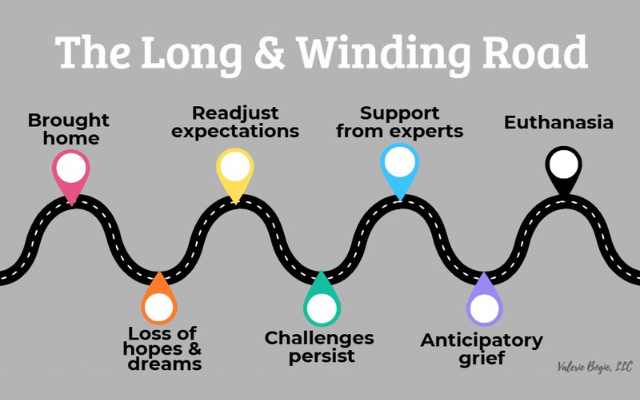
When someone decides to bring a new animal into their home, it is an exciting time. They are hopeful of a long life ahead together, dreaming about the activities to do and places to go. But as they get to know their new pet, there are some concerning behaviors. Maybe aggression, reactivity, fear, anxiety or a little bit of each. They attribute it to the adjustment period and continue forward. As time goes on, though, they start to recognize their pet’s increased needs. As they readjust their expectations, they grieve the hopes, dreams, and plans for their pet that may never come to fruition.
The challenges persist and the owner rises to the occasion with animal trainers, a veterinary behaviorist, and diagnostics to check for pain. The daily medications, behavioral management, and planning start to take its toll. They are tired. Their resources–time, money, physical energy and emotional bandwidth–are depleted. They start to question the sustainability of keeping the pet as they come to grips with the fact that both their pet’s quality of life–and their own–are poor.
They explore rehoming, although they know deep down that would only cause more stress and problems for the pet. In the end, they choose euthanasia. They go through anticipatory grief–grieving the loss of the pet while they are still alive. And then the dreaded appointment comes. They are feeling guilty, heartbroken, and wonder how they ever arrived here. After all the hard work, dedication, and love, they feel like a failure.
The veterinary perspective: Navigating our own moral distress
As a veterinary professional, a client brings their pet to you for behavioral euthanasia. The pet presents bright, alert, and responsive, and diagnostic tests are all within normal limits. You grapple with the thought of ending the life of a seemingly healthy animal, and it is difficult to know how to move forward.
This is an all too common scenario, and it is completely normal to question the situation. Euthanasia for any reason brings up ethical dilemmas and moral distress. When it is for behavioral reasons, it can add an additional weight because you do not see the suffering in the same way you might with a senior pet, a pet that has been hit by a car, or a pet at the end stages of cancer.
In those situations, we simply call it euthanasia. Not old age euthanasia, not traumatic injury euthanasia, not cancer euthanasia. So, why do we call it behavioral euthanasia? Words matter, and we can do better by a simple reframe. Can you just call it euthanasia? Or euthanasia for behavioral reasons? This is a small step toward removing the stigma surrounding euthanizing a pet for their extreme behavioral issues, especially when speaking with clients.
Re-centering the client’s reality
For some clients, the experience doesn’t end there. One dog owner I supported received a phone call from their primary care veterinarian after an in-home euthanasia was performed by a different veterinarian. During that call, the client experienced the conversation as judgmental and as having a lack of curiosity about the situation. There was limited space for the client to fully share their lived experience of the behavioral challenges, or the sustained stress that had led to the decision.
What was already a painful and complex loss quickly became layered with additional guilt, shame, and self-doubt. Instead of beginning the grieving process, the owner found themself questioning their decision and wondering if they had made the wrong choice. Interactions like this during a fragile time can significantly shape both the client’s grief experience and their relationship with the veterinary team.

Four realities to remember in practice
- You spend about 2-3% of the year with the pet—the owners are there the other 97-98%. There are 8,760 hours in a year. If you only see a pet for a few hours out of the entire year, you are catching a tiny glimpse of their life. While you are indeed an animal medical expert, the owners are still the expert for their specific pet. They know the triggers, the over-threshold reactions, the body language. They know what they’ve tried, and how stressed everyone in the household is.
- Behavioral euthanasia is not convenience euthanasia. I have supported countless pet owners before and after euthanizing their pet for behavioral reasons. I have yet to meet an owner that has not exhausted all options that are within their means.
- This is not just for pets that are aggressive, a safety risk, or have a bite history. Yes, an animal that has already bitten another animal or human is definitely a safety risk. So, sometimes it can make a little bit more logical sense to euthanize that animal for the safety of the household and community. But what about an animal that is becoming increasingly aggressive and resistant to treatment? Do we have to wait for a bite to end the suffering? Or can we decrease the risk by euthanizing before a bite? I also want to normalize the other reasons for behavioral euthanasia. Separation anxiety can cause an animal to harm themself, destroy property, and reduce their owner’s ability to leave their home. A dog that lives in a constant state of fear due to loud noises and is fearful of going outside does not have a good quality of life, either.
- A pet battling behavioral challenges is still sick. Many people still struggle to recognize mental health as part of overall human health, so it is easy to see why this is tough when it comes to animals. We need to recognize that health comes in two parts–physical and mental. Illness can affect one part or both parts, which will cause suffering.

Shift the narrative: Communication strategies for the veterinary team
Here is how we can pivot our language to protect the client’s mental health while alleviating our own communication anxiety:
| Instead of Saying… | What The Client Experiences | Consider Saying… | |
| 1. | Have you tried everything? | I am an incompetent pet owner. | I can tell you have been working hard to find a solution. |
| 2. | You should just rehome your pet. | Of course I would consider that before euthanasia- my vet isn’t listening to me. | What options have you explored so far? |
| 3. | It can’t be that bad, just keep trying. | My suffering and my pet’s suffering aren’t being validated. | It sounds really difficult to live like this. |
| 4. | Why don’t you take your pet home and think about it some more. | I can’t trust my vet and my vet doesn’t trust me. | I trust you know the best for your pet and your family. |
| 5. | I won’t help you. | I am making a mistake. | How sustainable does this feel? |
Moving forward with compassion
These cases stay with us because they challenge not only our clinical judgment, but our values, identity, and ability to empathize when we are uncomfortable. While behavioral euthanasia will never feel easy, it can be approached with intention, respect, and a commitment to reducing suffering in all its forms. It is also an opportunity to show up with curiosity, compassion, and trust in both our clients and ourselves.
If you’re looking to explore this topic further, listen to Dr. Marie Holowaychuk and I discuss euthanasia for behavioral reasons on the Reviving Veterinary Medicine podcast, where we expand on these themes. You can also access a curated list of resources to support you, your clients, and your team.